
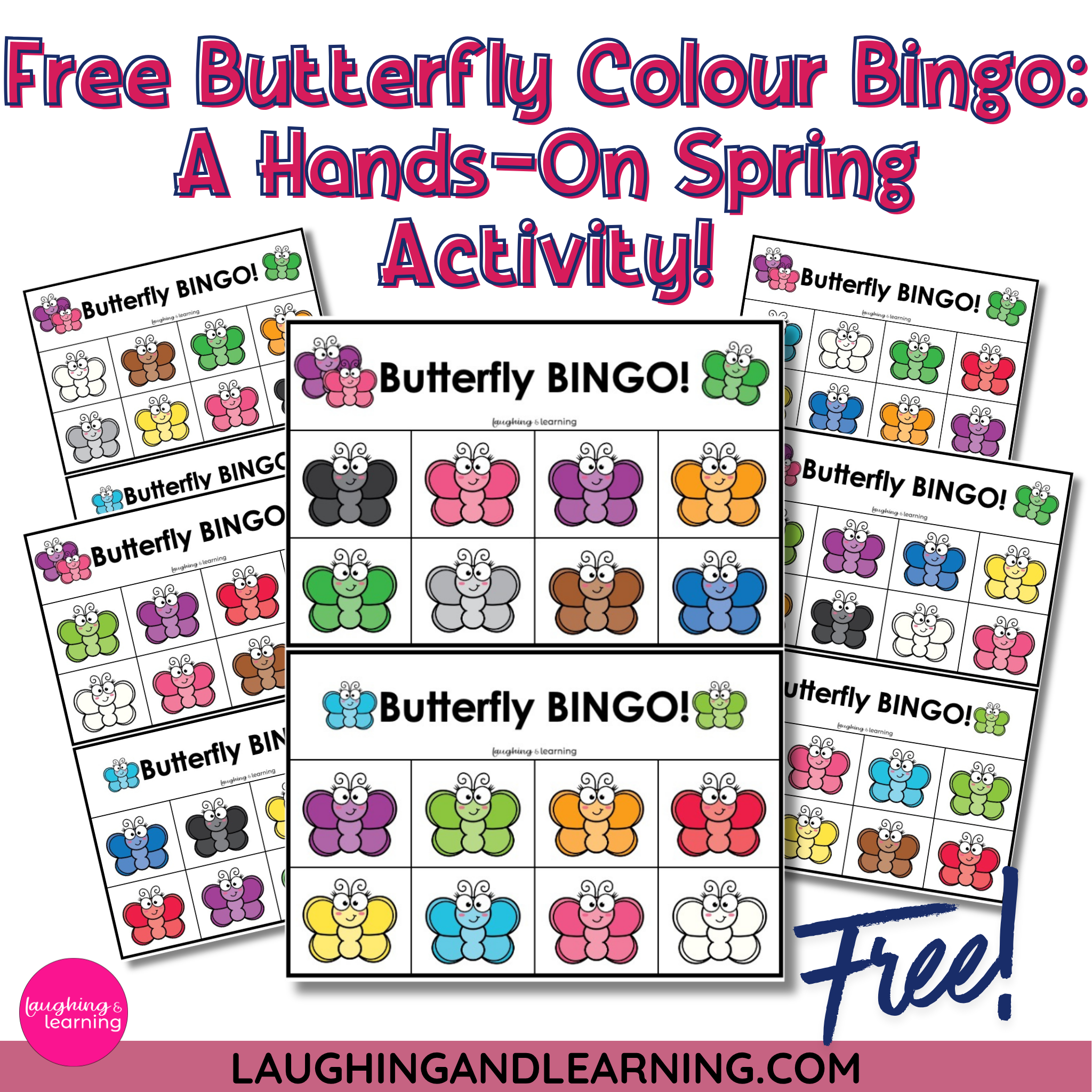
Spring is the perfect season to mix bright colours with playful learning. Butterfly colour bingo invites little learners to spot, name, and cover butterflies of every shade. The game feels light and joyful, yet it builds real classroom-ready skills. Best of all, it works with kids who love quiet matching games and kids who thrive on group play.
This free printable was designed for ages 3 to 6. It fits naturally into preschool, Pre-K, and Kindergarten routines. Teachers, parents, and tutors can grab it, print it, and start playing within minutes.
What is Butterfly Colour Bingo?

Butterfly colour bingo is a classic bingo game with a colourful spring twist. To begin, each player gets a board filled with butterflies in different colours. Next, the leader calls out a colour from the deck of butterfly cards. Players then search their boards and cover any matching butterfly with a counter, chip, or token.
The first player to cover a full row, column, or full card calls out “Bingo!” and wins that round. The rules are simple, the visuals are cheerful, and the play is endlessly repeatable.
What’s Included in the Free Printable
The free download gives you everything you need to play right away. Inside the file, you will find:
- Multiple butterfly bingo boards in a variety of colour combinations
- A full set of individual butterfly calling cards
- Clear preparation and teaching instructions
- Variations, extensions, and differentiation tips
- Teacher talk prompts to guide rich colour conversations
You only need a few extra supplies, such as counters, pom poms, mini erasers, or bingo chips. In fact, many classrooms already have these on hand.
Skills Children Build with Butterfly Colour Bingo

Although bingo looks like pure fun, it quietly strengthens several developmental areas at once. That is what makes it such a smart choice for early learners.
Early learning and math foundations. Children practise colour recognition, visual discrimination, and matching. Together, these skills support sorting, patterning, and later math concepts.
Cognitive and executive function. Players must focus, scan the board, and remember which colours have been called. As a result, they sharpen attention, memory, and processing speed.
Language and communication. Similarly, naming colours aloud expands vocabulary in a meaningful way. Learners also practise listening carefully and following directions.
Social development. Above all, bingo is a turn-taking game by nature. Children learn to wait, watch, and cheer for each other while following shared rules.
Positive learning behaviours. Players stay engaged, persist through close rounds, and gain confidence in independent participation. These habits carry into many other classroom moments.
How to Prepare Your Butterfly Colour Bingo Boards
Setup is genuinely quick. First, print the bingo boards and calling cards on cardstock for durability. Next, laminate the pieces if you want them to last for years of repeated play. Then cut out the calling cards and store them in a small bag or container.
Finally, gather a handful of counters, tokens, or small manipulatives for marking the boards. Pom poms, mini erasers, and glass gems all work beautifully.
How to Play the Core Game

First, give each learner a bingo board. The teacher or game leader then selects a butterfly calling card and names the colour out loud. Players scan their boards and look for a butterfly that matches. When they find one, they cover it with a counter or marker.
Then play continues card by card. The first learner to complete a row, column, or diagonal calls out “Bingo!” Then the group checks the board together. Once a winner is confirmed, clear the boards and start a new round.
The structure is familiar, which helps young children feel confident from the very first game.
Fun Variations and Extensions
The same printable can power dozens of different play sessions. Try one of these variations to keep things fresh:
- Colour naming challenge. Learners must say the colour aloud before covering it on their board.
- Descriptive language extension. Players describe the butterfly using richer words, such as “light blue” or “dark green.”
- Movement bingo. Place calling cards around the room and have learners walk, hop, or tiptoe to find matches.
- Real world connection. After each call, players name something else in the classroom that shares that colour.
These small tweaks turn a single game into a full week of learning.

Differentiation for Every Learner
Every classroom holds a wide range of skills. The good news is that butterfly colour bingo flexes easily.
For beginning learners, use fewer colours per board, model the steps clearly, and play in small supported groups. Developing learners can manage the full boards and play with growing independence. Advanced learners are ready for richer vocabulary, including specific shades, and they often love taking on the role of caller.
As a result, this gentle differentiation lets you use the same printable across multiple ability levels.
Teacher Talk Prompts to Deepen Learning
A few open-ended questions can transform a quick game into a meaningful conversation. Try prompts like these during play:
- “What colour do you see?”
- “Can you find the same colour on your board?”
- “What other things are this colour?”
- “Can you describe this colour?”
- “How do you know this is the right match?”
These questions stretch language, build reasoning, and invite quieter learners into the discussion.
Where Butterfly Colour Bingo Fits in Your Day

This game slides smoothly into many parts of the schedule. Use it as a math centre activity for small groups, or play it during circle time for whole-group fun. It also works well as a tabletop game station for independent or peer-led play. During small group instruction, the cards give educators a natural way to support colour identification and language development.
The spring butterfly theme also pairs beautifully with units on insects, life cycles, gardens, and weather.
Download Your Free Butterfly Colour Bingo Printable

Ready to bring some bright butterfly fun into your classroom or home? Grab the free download. Print on cardstock, laminate for longevity, and gather your favourite small markers.
Looking for More Activities?
If your learners loved this activity, you’ll find even more resources in the Laughing & Learning shop! From printable worksheets to hands-on literacy and math activities, there’s something for every learner.
If you use this in your classroom or at home, I’d love to hear how it went! Drop a comment below or tag me on Instagram. 🌸