
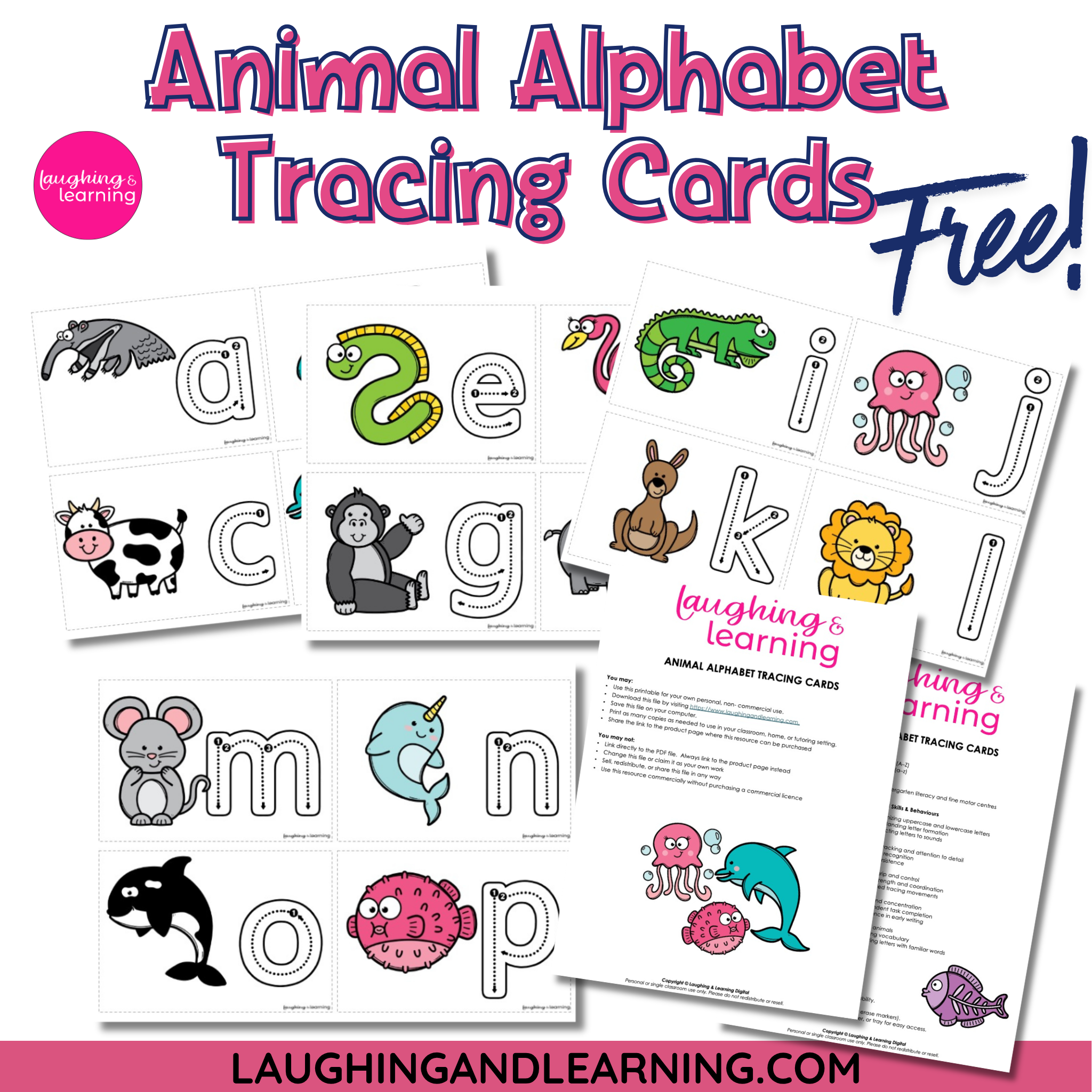
Looking for an alphabet activity that children will genuinely love? These Animal Alphabet Tracing Cards combine adorable animal illustrations with structured letter practice to create a literacy activity that is as engaging as it is educational. Each card pairs a vibrant, recognizable animal with its corresponding letter, giving children a meaningful, memorable anchor for every single letter of the alphabet. Best of all, these animal alphabet tracing cards for preschool cover both uppercase and lowercase letters in separate card sets, and they are completely free!
Whether you are setting up a writing centre, stocking morning bins, or simply looking for a fresh at-home literacy activity, these cards are low-prep, reusable, and ideal for ages 3–6.
What’s Included
- Uppercase animal alphabet tracing cards A–Z
- Lowercase animal alphabet tracing cards a–z
- Numbered stroke guides on every letter for correct formation
- Colourful animal illustrations connecting each letter to a familiar word
- Ideal for preschool, pre-K, and kindergarten literacy and fine motor centres

Why Animal Alphabet Tracing Cards Work So Well for Preschool Learners
Young children learn best when new information is anchored to something meaningful and familiar. That is precisely what makes these animal alphabet tracing cards for preschool so effective. Rather than presenting letters in isolation, each card connects a letter to a vivid animal illustration. An anteater for A, a cow for C, a flamingo for F, a gorilla for G. This connection gives children a concrete mental hook for each letter, making recognition and recall significantly easier over time.
Moreover, tracing letters repeatedly helps children build the muscle memory needed for independent writing. Each card includes numbered stroke guides so children learn not just what a letter looks like, but how to form it correctly from the very beginning. This matters because poor letter formation habits, once established, can be difficult to correct later. Therefore, starting with guided tracing using clearly numbered strokes sets children up for confident, accurate writing from the start.
Skills These Animal Alphabet Tracing Cards Build

These cards are carefully designed to develop multiple skill areas simultaneously, making them a high-value addition to any preschool or kindergarten setting.
Early Literacy: Children practise recognizing uppercase and lowercase letter forms, understanding correct letter formation, and connecting letters to sounds. All essential foundations for reading and writing readiness.
Language and Communication: The animal theme naturally sparks vocabulary development. As children name each animal, they strengthen their ability to associate letters with familiar words, which deepens both alphabet knowledge and early phonics skills. For example, saying “G is for gorilla” while tracing the letter G reinforces the letter-sound connection in a way that feels conversational and natural.
Cognitive and Executive Function: Following the numbered stroke guides requires visual tracking, pattern recognition, and step-by-step sequencing. Additionally, staying focused on a tracing task builds the sustained attention and task persistence that children need across all areas of learning.
Fine Motor Development: Tracing letter outlines develops pencil grip, hand strength, and the controlled, precise hand movements that children need for writing. Used with dry-erase markers on laminated cards, these become a reusable fine motor tool that provides valuable daily practice throughout the year.
Positive Learning Behaviours: Completing a tracing card independently gives children a genuine sense of achievement. Over time, this builds confidence in early writing. A confidence that carries forward into every literacy task they encounter.
How to Prepare Your Animal Alphabet Tracing Cards

Preparation is quick and straightforward. First, print the cards on cardstock for durability. Cardstock gives the cards the weight they need to hold up under repeated handling by little hands. Next, laminate the cards so they can be used with dry-erase markers over and over again. A simple step that transforms these into a lasting classroom resource. Then, provide pencils, crayons, or dry-erase markers depending on whether the cards are laminated. Finally, organize the cards in a literacy centre bin, binder, or tray for easy access. You may also choose to keep the uppercase and lowercase sets separate, which makes it simple to target one case at a time when differentiating for individual learners.
How to Use These Animal Alphabet Tracing Cards for Preschool
Core Activity: Trace and Recognise Letters Children observe the animal on the card and identify the corresponding letter. They then trace the letter using the numbered stroke guides, repeating several times to build muscle memory. Encourage learners to say the letter name (and optionally the letter sound) while tracing. Prompting children to connect the animal to the letter, such as “A is for anteater, what sound does A make?” deepens both phonics and vocabulary skills in a single, simple activity.
Writing Centre Place cards in a writing centre alongside markers or pencils for independent practice. Because the animal illustrations are so engaging, children are naturally drawn to pick up the cards and get started without prompting.
Animal Literacy Centre For a richer experience, pair the tracing cards with small animal figurines or animal picture books. Children can match the figurine to the card, name the animal, trace the letter, and then find other animals in the room that start with the same sound. This kind of multi-step, multi-sensory engagement deepens learning considerably.
Small Group Instruction Use a selection of cards in a small group setting to guide correct letter formation. Model proper pencil grip and stroke direction, then observe as children trace independently. This is an ideal opportunity to identify and gently correct any formation habits before they become ingrained.
Morning Bins These animal alphabet tracing cards make an excellent morning bin activity. The colourful animal illustrations are immediately eye-catching, which means children settle in and begin working quickly and happily. A great way to start the learning day.
Variations and Extensions

Rainbow Tracing: Have children trace each letter multiple times using a different colour on each pass. The rainbow effect is visually rewarding and provides extra repetitions without feeling tedious.
Sound Connection: After tracing, ask children to say the letter sound and name the animal on the card. Then challenge them to think of one more word that starts with the same sound. This simple extension turns tracing into a full phonics activity.
Air Writing Extension: After practising on the card, children trace the letter in the air using their whole arm. This movement-based approach reinforces formation through a different sensory channel and is especially effective for kinaesthetic learners.
Animal Matching Extension: Match each tracing card to a real animal figurine or a picture from an animal book. This hands-on connection strengthens the letter-word link and adds a playful, exploratory dimension to the activity.
Differentiation for Every Learner
Beginning Learners: Focus on one letter at a time with hand-over-hand support. Encourage finger tracing before introducing a pencil or marker, and celebrate every attempt warmly.
Developing Learners: Encourage independent tracing with attention to correct stroke order and direction. Use the numbered guides as a prompt and gradually reduce adult support as confidence grows.
Advanced Learners: After tracing, have children write the letter independently on blank paper and generate additional words that begin with that letter. This bridges the gap between guided tracing and confident, independent writing.
Helpful Teacher Talk Prompts

- “What letter is this?”
- “Can you trace it slowly with your finger first?”
- “What sound does this letter make?”
- “What animal do you see? What sound does it start with?”
- “Can you think of another word that starts with this letter?”
- “Can you try writing it on your own?”
Download Your Free Animal Alphabet Tracing Cards
Grab your free animal alphabet tracing cards for preschool today and give your learners an alphabet activity they will ask for again and again!

Looking for More Alphabet and Literacy Activities?
If your learners loved these animal alphabet tracing cards, there are plenty more hands-on literacy resources in the Laughing & Learning shop. From phonics activities to fine motor printables, there is something to support every learner at every stage.
Looking for More Spring Activities?
If your learners loved this beginning sounds activity, you’ll find even more Spring resources in the Laughing & Learning shop! From printable worksheets to hands-on literacy and math activities, there’s something for every learner.
If you use this in your classroom or at home, I’d love to hear how it went! Drop a comment below or tag me on Instagram. 🌸