
Teaching young children to communicate goes far beyond spoken words. ASL alphabet flashcards for preschool offer a playful, hands-on entry point into American Sign Language – one that supports early literacy, fine motor development, and inclusive communication all at once. Whether you are a classroom teacher, a homeschool parent, or an early childhood educator, these cards make fingerspelling approachable, engaging, and genuinely fun.
What Are ASL Alphabet Flashcards?

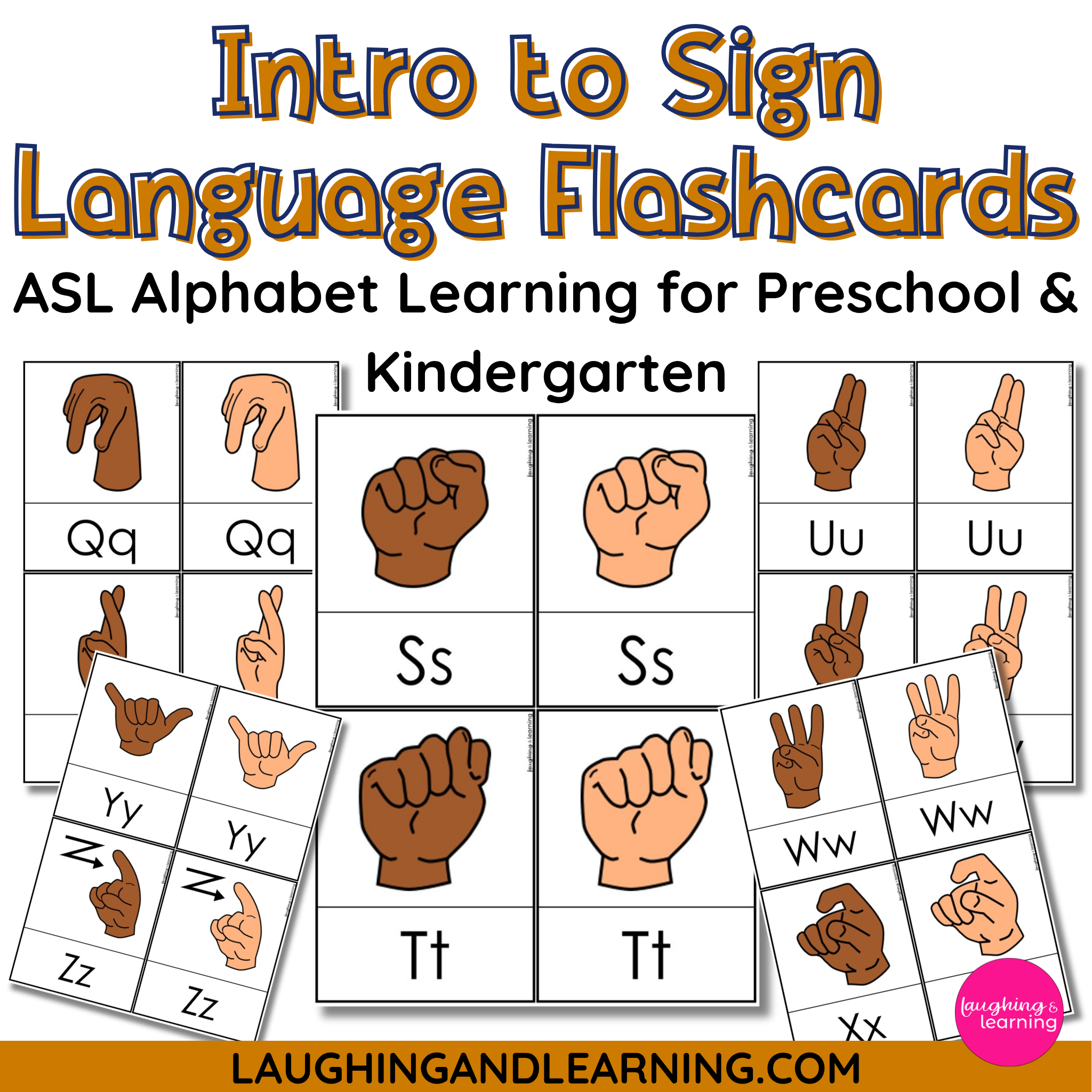
ASL (American Sign Language) alphabet flashcards are printable or physical cards that pair each letter of the alphabet with its corresponding ASL handshape. Each card features a clear illustration of the hand forming the letter, alongside the printed uppercase and lowercase letter label. Children can use them to match letters to signs, practice fingerspelling their own names, or simply explore a new way of communicating.
This particular set from Laughing & Learning includes A–Z letter cards with both uppercase and lowercase labels, ASL fingerspelling handshapes for each letter, and trim guidelines for easy preparation. The resource is designed for ages 4–7, making it ideal for Pre-K, Kindergarten, and Grade 1 language centres.
Why Introduce Sign Language in Preschool?
Many educators are surprised to discover just how naturally young children take to sign language. At this stage of development, children are highly receptive to visual and physical learning – and ASL taps directly into that strength.

Here are a few reasons to bring ASL alphabet flashcards for preschool into your classroom or home:
Early literacy support – Connecting a letter to a handshape adds a tactile, kinesthetic layer to letter recognition. Children are not just seeing “A” – they are feeling it.
Fine motor development – Forming each handshape requires children to isolate fingers, stabilize the hand, and build bilateral coordination. Letters like J and Z even introduce controlled movement.
Non-verbal communication awareness – Introducing ASL teaches children that communication takes many forms, building empathy and respect for the Deaf community.
Working memory and sequencing – Fingerspelling a word requires children to hold a sequence of letters in mind – a genuine cognitive challenge that strengthens executive function.
Inclusive classroom culture – Using ASL signals to all children that different communication styles are valued and celebrated.
What’s Included in This Set

The Laughing & Learning ASL alphabet flashcard set is thoughtfully designed for easy classroom use. Here is what you will find inside:
A–Z letter cards – with matching ASL handshape illustrations
Multicultural skin tone representations – each letter includes two card versions featuring different skin tones, so every child can see themselves reflected
Uppercase and lowercase labels – printed clearly beneath each handshape
Teacher instruction pages – with engagement activities, differentiation strategies, and teacher talk prompts
Trim guidelines – for clean, professional-looking cards
The multicultural design is particularly meaningful. Representation matters in early childhood resources, and having hand illustrations in a range of skin tones sends a quiet but powerful message: sign language belongs to everyone.
How to Use ASL Alphabet Flashcards in the Classroom

One of the best things about this resource is its flexibility. There is no single right way to use it – the cards adapt to your space, your students, and your goals.
Match and Model – Post a row of letters (A–Z or a subset) on the wall or board. Learners find the matching sign card for each letter and place it underneath. Then the whole class models the handshape together while saying the letter name aloud. This is a natural fit for morning meeting or circle time.
Fingerspell My Name – Provide each child with a name tent or name card. They find the letters in their name among the flashcards, then practice spelling it out using ASL signs. This is a wonderful way to make the activity personal and immediately meaningful.
I-Spy Letter – The teacher says, “I spy the letter that starts moon.” Children point to M, then show the M handshape. This bridges phonics awareness with sign language in a single game.
Sign The Letter – The teacher holds up a sign card without showing the label. Learners identify the letter and find the matching printed card. Reversing the direction challenges children who are ready for a greater cognitive stretch.
Speed Strip – Place five to eight mixed letters on the table. On “go,” learners touch each letter, show the handshape, and say the letter name in sequence. It is a quick, energizing activity that works beautifully as a literacy centre rotation.
Differentiation and Extensions
This resource includes built-in suggestions for meeting a range of learners right where they are.
For learners who need additional support, start with six to eight high-utility letters (m, s, t, a, p, n) and expand gradually. A visual scaffold – such as a mini reference strip kept at the centre – helps children self-check their handshapes as they work independently.
For learners who are ready to be challenged, encourage them to fingerspell simple words like cat, pizza, or zoo. Word Rings are a great extension activity: after mastering the alphabet, children can practice spelling common words using the cards in sequence.
Mirror work is another strong strategy across all levels. Giving each child a small hand mirror lets them check their thumb placement and finger positioning independently, building self-correction skills without needing constant teacher feedback.
Practical Preparation Tips

Getting these cards ready for your classroom takes very little time. Print on cardstock for durability, laminate for long-term wipe-clean use, and cut along the trim guidelines. Once prepared, the cards will hold up through repeated handling – making them a lasting addition to your literacy resources.
If you plan to use them as a wall display rather than individual cards, consider printing two sets: one for the wall and one for student use at centres.
Final Thoughts

ASL alphabet flashcards for preschool are far more than a novelty activity. They are a genuine early literacy tool – one that builds letter recognition, fine motor skills, working memory, and a foundational appreciation for inclusive communication. The Laughing & Learning set makes implementation simple for teachers while keeping the experience rich and engaging for children.
If you are looking for a resource that does double duty – supporting your literacy curriculum while also opening a window into Deaf culture – this is one worth adding to your collection.
Looking for More Literacy Activities?
If your learners enjoy these Intro to Sign Language Flashcards, you will find many more hands-on resources in the Laughing & Learning shop. Happy learning!
If you use this in your classroom or at home, I’d love to hear how it went! Drop a comment below or tag me on Instagram. 🌸