
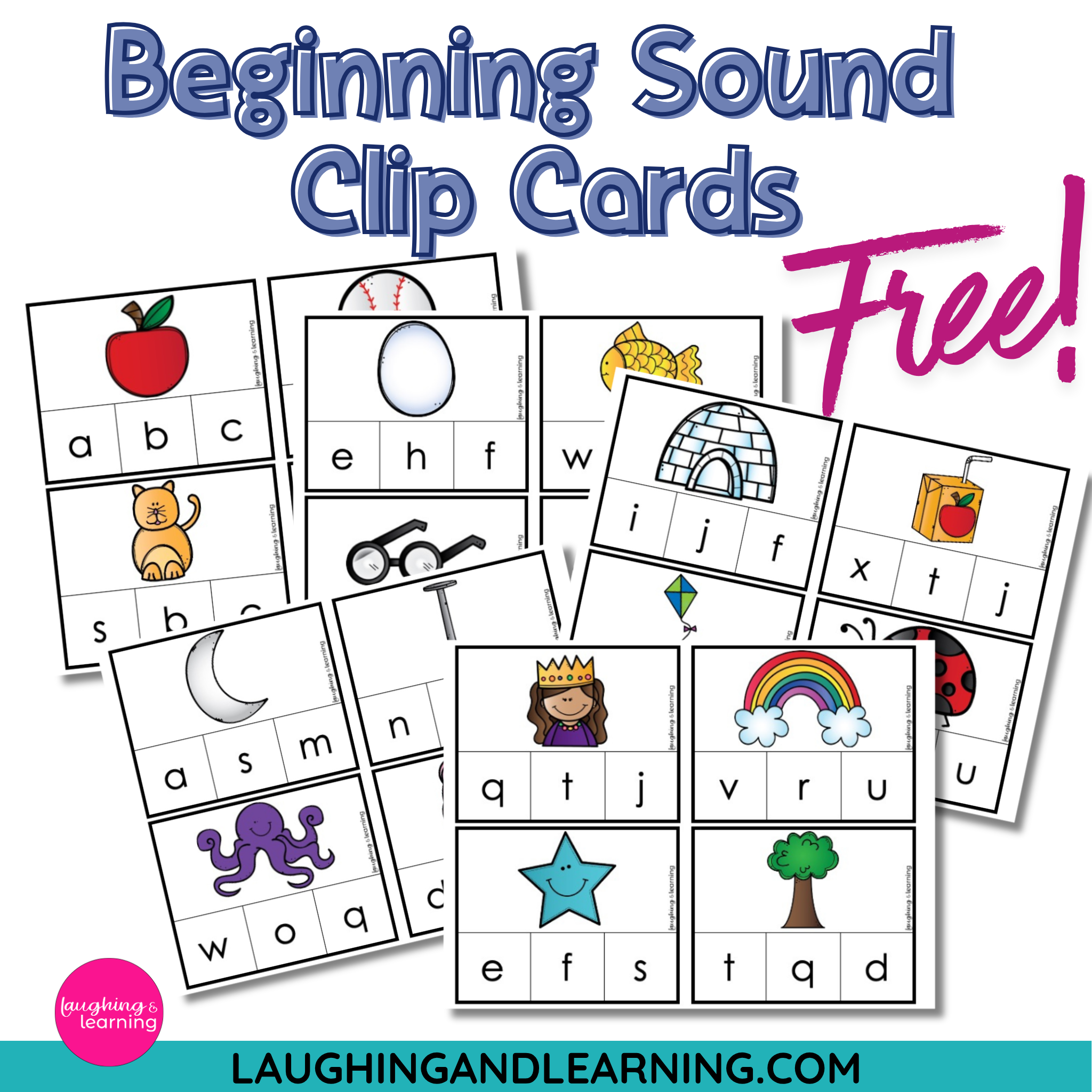
Looking for a simple and engaging way to help children practise beginning sounds? These beginning sounds clip cards are a hands-on literacy activity that builds early reading skills in a fun, interactive way. Best of all, they’re easy to print and prep, and learners absolutely love them!
Whether you’re a teacher looking for a reliable literacy centre activity or a parent supporting reading at home, these cards are a low-effort, high-impact tool that fits seamlessly into any routine.
What’s Included
- 26 beginning sounds clip cards with images
- 3 letter choices on each card
- Easy-to-print, low-prep format
- Suitable for preschool and kindergarten learners
Each card is designed to be visually clear and engaging, with bright, recognizable images that make it easy for young learners to focus on the task, identifying the beginning sound, without feeling overwhelmed.
Why Beginning Sounds Matter
Before children can read independently, they need to understand that words are made up of individual sounds. This concept, known as phonemic awareness, is one of the most important early literacy skills a child can develop.
Beginning sounds, also called initial sounds, are the perfect starting point. When a child looks at a picture of a cat and identifies that it starts with the letter “c,” they’re making a crucial connection between spoken language and written letters. This letter-sound knowledge forms the foundation for decoding new words, spelling, and eventually fluent reading.
Research consistently shows that children who have strong phonemic awareness skills in preschool and kindergarten go on to become more confident, capable readers. That’s why activities like these beginning sounds clip cards are so valuable, they give children repeated, low-pressure practice with exactly the skills they need most.
Why You’ll Love This Activity
Beginning sounds are a key phonics skill, and this activity makes practizing them both simple and effective, for the adult running the activity and the child doing it.
Each card shows a familiar picture, like an apple, cat, or donut, alongside three letter choices. Children look at the image, say the word aloud, and then pick the letter that matches the beginning sound. It’s a straightforward process that builds confidence with every correct answer.
One of the things that makes these cards especially popular is the use of clothespins or clips to mark answers. This small but clever design choice turns a literacy activity into a fine motor workout at the same time. Pinching a clothespin strengthens the small muscles in the hand and fingers, the same muscles children need for writing. So while it may look like simple play, a lot of important development is happening at once.
These clip cards are also wonderfully self-correcting when used with a simple answer key on the back, meaning learners can check their own work and feel a real sense of achievement without needing constant adult input.

Preparation Tips
One of the best things about these cards is how little prep they require. Here’s how to get the most out of them:
Print on cardstock. Regular printer paper works in a pinch, but cardstock gives the cards much better durability, especially with repeated use by little hands.
Laminate for longevity. A quick pass through a laminator means these cards can survive spills, sticky fingers, and years of use. If you don’t have a laminator at home, many office supply stores offer laminating services for a small fee.
Store smartly. Keep the cards on a binder ring for easy grab-and-go use, or store them in a small bin or ziplock bag in your literacy centre. Labelling the bag with the skill name makes it easy to find exactly what you need.
Gather your clips. Standard wooden clothespins work perfectly and are inexpensive to buy in bulk. You can also colour-code the clips by skill set if you’re using multiple sets of cards.
Try a dry-erase option. If you’d rather skip the clothespins, dry-erase markers on laminated cards work just as well and offer an easy reset between uses. This is especially handy in home settings or for one-on-one work.
How to Use These Beginning Sounds Clip Cards
These beginning sounds clip cards are wonderfully versatile, whether you’re using them at home or in the classroom. Here are some of the best ways to put them to work:
Literacy Centre or Independent Station Set the cards out in a literacy centre alongside a small basket of clothespins. Children can work through the cards independently, practising their beginning sounds at their own pace. This is a great option for centres-based classrooms or for quiet work time at home.
Morning Bins or Warm-Up Activities Tuck a small set of cards into a morning bin or use them as a warm-up activity at the start of the school day. Starting with something familiar and manageable helps learners ease into learning mode and builds a sense of routine and confidence.
Small Group Instruction These cards are excellent for small group sessions where you can guide the activity, prompt discussion, and offer targeted support. Ask children to say the word out loud, stretch the sounds, and explain their letter choice. This kind of verbal interaction deepens understanding and makes the learning more memorable.
Informal Assessment Use the cards as a quick and easy formative assessment tool. Watch which letters a child confidently identifies and which ones they hesitate on. This gives you valuable insight into where they are in their phonics development without the pressure of a formal test.
Partner Play Pair learners together and let them take turns. One child holds up a card while the other identifies the beginning sound. This peer-to-peer practice builds communication skills alongside phonics knowledge.
At-Home Practice For parents, these cards are a fantastic way to support what children are learning at school — or to get a head start before kindergarten begins. Keep a set on the kitchen table or in a homework bag for easy access. Even five to ten minutes of practice a day can make a big difference over time.
Tips for Getting the Most Out of Phonics Practice
A few simple strategies can make your beginning sounds practice even more effective:
Say the word out loud first. Before choosing a letter, encourage children to say the word aloud slowly. This helps them hear the beginning sound more clearly before they search for the matching letter.
Stretch the sounds. Teach children to “stretch” words like a rubber band, s-s-s-sun, c-c-c-cat, to isolate the first sound. This technique, often called sound segmentation, is one of the most effective ways to build phonemic awareness.
Celebrate effort, not just accuracy. When a child chooses the wrong letter, use it as a learning moment rather than a correction. “Good try! Let’s say the word together again, what sound do you hear at the very beginning?” This keeps the experience positive and encourages children to keep trying.
Keep sessions short and playful. Young children learn best in short bursts. Ten to fifteen minutes of focused, playful practice is far more effective than a long, drawn-out session. When learning feels like a game, children are more engaged and more likely to retain what they’ve practised.
Connect to real life. Look for beginning sounds in everyday moments, “Milk starts with /m/, what other things in the kitchen start with /m/?” These spontaneous connections reinforce phonics concepts in a natural, meaningful way.
Grab Your Free Printable
Download your beginning sounds clip cards today and start building strong literacy foundations through play!

Looking for More Literacy Activities?
If your learners loved these clip cards, you’ll find even more literacy resources in the Laughing & Learning shop! From printable resources to hands-on literacy and math activities, there’s something for every learner.