

Letter recognition is one of the most important milestones in early literacy – and it is also one of the most repeated. Children need to encounter the alphabet again and again, in different contexts and formats, before it truly clicks. That repetition does not have to feel like drilling. Ice cream alphabet puzzles offer a hands-on, self-correcting approach to letter learning that keeps young children genuinely engaged.
Whether you are setting up a literacy centre, stocking a morning tub, or looking for a no-prep activity that holds attention at home, this resource from Laughing & Learning is worth a close look.
What Are Ice Cream Alphabet Puzzles?
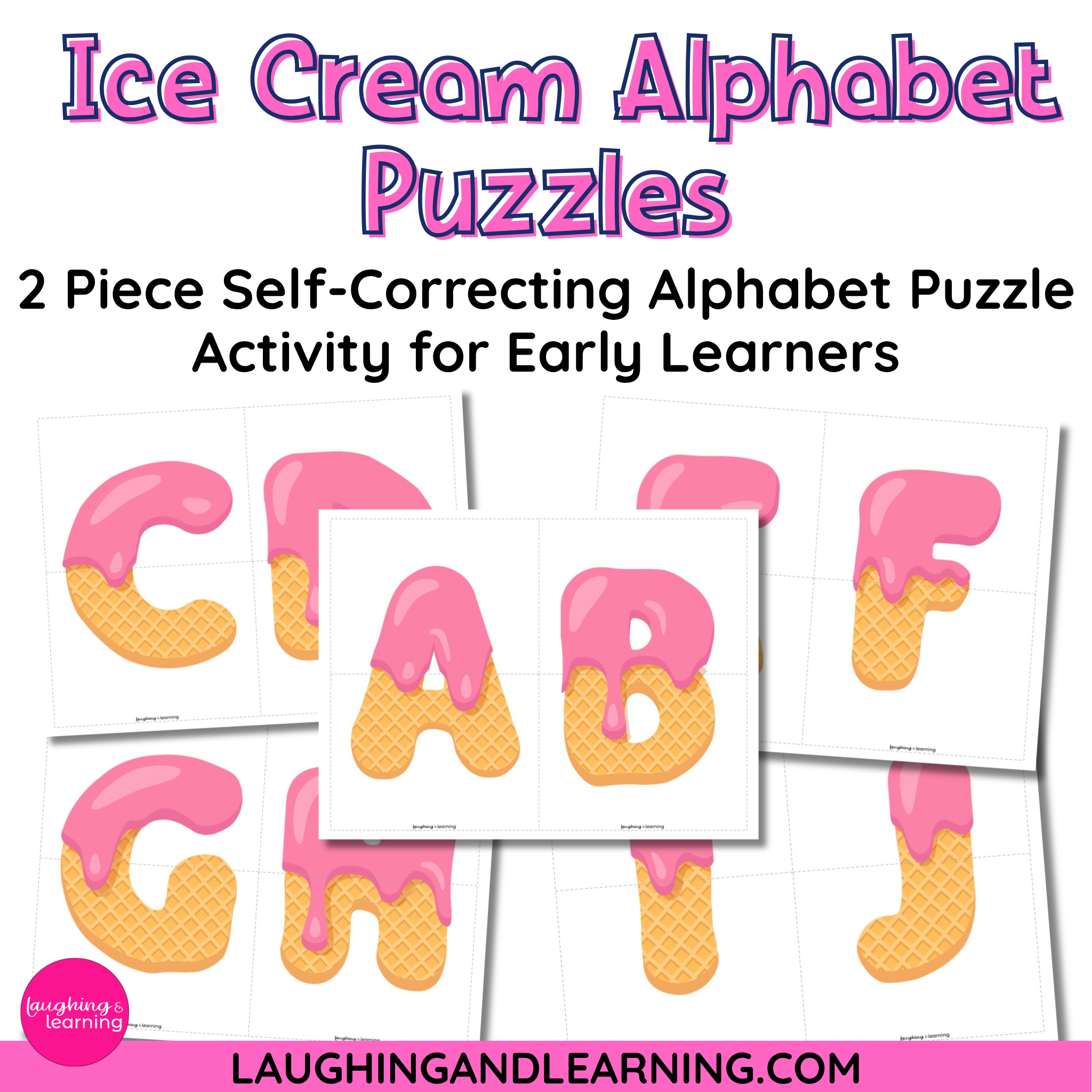
Ice cream alphabet puzzles are 2-piece printable puzzles, with each puzzle featuring one uppercase letter styled as a dripping ice cream cone. The letter is split across two puzzle pieces – a top half showing the ice cream scoop portion and a bottom half showing the cone. To complete each puzzle, learners find and connect the two matching pieces.

The set includes all 26 letters from A to Z, making it a complete alphabet resource right out of the box. The self-correcting design is a key feature: the puzzle pieces for each letter fit together in a unique way, so children can check their own work without needing an adult to confirm every match. This independence is genuinely valuable in a classroom setting where a teacher cannot give one-on-one attention to every learner at once.
Recommended for ages 3 to 6, the puzzles are appropriate for preschool, pre-K, and kindergarten. Preparation is simple – print on cardstock, laminate for durability, and cut along the printed guidelines.
Why the Puzzle Format Works for Alphabet Learning

There is a reason puzzles appear in virtually every early childhood setting. The physical act of manipulating pieces, rotating them, and testing whether they fit engages children in a way that looking at a page simply cannot. With alphabet puzzles specifically, that hands-on element does a lot of important work.
When a child picks up the top half of the letter G and searches for its matching bottom, they are not passively seeing the letter – they are actively processing its shape. They look at curves, angles, and proportions. They make decisions. That active engagement strengthens the visual memory of the letter far more effectively than tracing or flashcard review alone.
The ice cream theme adds another layer of appeal. The bright pink icing and golden waffle cone design make each letter look genuinely fun to handle. Children who might resist a traditional worksheet will often gravitate toward an activity that looks like a treat. That motivation is not a small thing – it is the difference between a child who persists through a task and one who drifts away after thirty seconds.
Learning Domains Covered
Ice cream alphabet puzzles are not a single-skill activity. They support development across several domains at once, which makes them easy to justify as a centre activity during structured literacy time.

Early Literacy – The primary focus is uppercase letter recognition and growing alphabet knowledge. Children learn to identify each letter by its distinct visual shape, which is a foundational step toward both reading and writing.
Cognitive and Executive Function – Completing the puzzles requires problem-solving, visual discrimination, and spatial reasoning. Children must look carefully at each piece and decide whether it belongs.
Fine-Motor Development – Picking up, rotating, and placing puzzle pieces works the small muscles of the hand. This kind of fine-motor practice directly supports the hand control children need for writing. It is literacy skill-building and fine-motor development happening at the same time.
Positive Learning Behaviours – Because the puzzles are self-correcting, children experience success on their own terms. They learn to persist, try again when a piece does not fit, and explore independently. These habits – patience, persistence, and self-directed learning – matter well beyond the alphabet.
How to Use Ice Cream Alphabet Puzzles in the Classroom
The core activity is straightforward: place a set of mixed puzzle pieces in front of the learner and invite them to find the matching halves for each letter. Once a puzzle is complete, encourage the child to name the letter and, if ready, say its sound. That simple addition turns a matching activity into a full letter-sound connection opportunity.
Literacy Centre – Place all the puzzle pieces in a sensory bin. Children reach in, pull out pieces, and hunt for matching pairs to assemble the letters. The sensory element adds novelty and makes the activity feel more like play.
Small Group Table – Work with a small group as they complete puzzles, guiding conversation about letter names, sounds, and words that begin with each letter. Teacher prompts like “What sound does this letter make?” or “Can you think of a word that starts with this letter?” extend the learning naturally.
Alphabet Exploration Centre – Set out several complete puzzle sets and invite learners to work through multiple letters independently. This works well as a rotation activity in a literacy block.
Morning Tub Activity – Puzzle pieces in a morning tub give early arrivals something purposeful and engaging to work on before the day officially begins. It is low-prep, self-managing, and directly tied to curriculum goals.
Three Extensions Worth Trying
Once children are comfortable with the basic puzzle activity, these extensions push the learning further without requiring new materials.

Letter Identification – After completing a puzzle, the child names the letter and generates words that begin with that sound. This bridges letter recognition to phonological awareness and early phonics.
Alphabet Order Challenge – Once several puzzles are complete, learners arrange the finished letters in alphabetical order from A to Z. This activity develops sequencing skills and reinforces the order of the alphabet in a concrete, tactile way.
Memory Match – Mix the pieces from several different letter puzzles and invite the child to find the pairs that belong together. This is a more challenging version of the core activity and works well for advancing learners who need an extra push.
Built-In Differentiation for Mixed-Ability Groups
One of the practical strengths of this resource is how naturally it differentiates across ability levels within the same classroom.
Beginning learners work with one puzzle at a time. Reducing the number of pieces in play lowers the cognitive load, which builds confidence for continued engagement.
Developing learners can handle multiple mixed puzzles at once, searching through a larger collection of pieces to find their matches. The added complexity keeps the activity appropriately challenging without requiring different materials.
Advanced learners take on the alphabet order challenge, assembling several letters and then sequencing them correctly from A to Z. This extension moves beyond recognition into knowledge of alphabetical order – a skill that will serve them in reading and reference tasks for years.
Making It Work at Home
For parents, ice cream alphabet puzzles are a refreshingly easy activity to set up. Print, laminate if you like, cut, and go. The pieces store in a small bag or container, making them easy to pull out at the kitchen table, pack for travel, or bring along to a waiting room.

They also open up natural conversation. Working through a few letters together gives you a built-in reason to talk about words, sounds, and the alphabet – without it feeling like a lesson. “What other words start with B?” is a much more engaging question when there is a pink ice cream B sitting right in front of you.
A Literacy Resource That Pulls Its Weight
Ice cream alphabet puzzles are the kind of early literacy resource that earns its place in a collection. They are visually appealing without being overwhelming, and versatile enough to use in multiple ways across the school year. For any educator or parent working with children in the preschool-to-kindergarten range, they offer a sweet, effective path to alphabet mastery – one puzzle piece at a time.
Looking for More Summer Activities?
If your learners loved these Ice-cream Alphabet Puzzles, you’ll find even more resources in the Laughing & Learning shop! From printable worksheets to hands-on literacy and math activities, there’s something for every learner.
If you use this in your classroom or at home, I’d love to hear how it went! Drop a comment below or tag me on Instagram. 🌸